

The agenda for the summit goes beyond symbolic diplomatic relationships.
Putin’s New Delhi Summit: Key Defence Discussions and India-Russia Trade Priorities
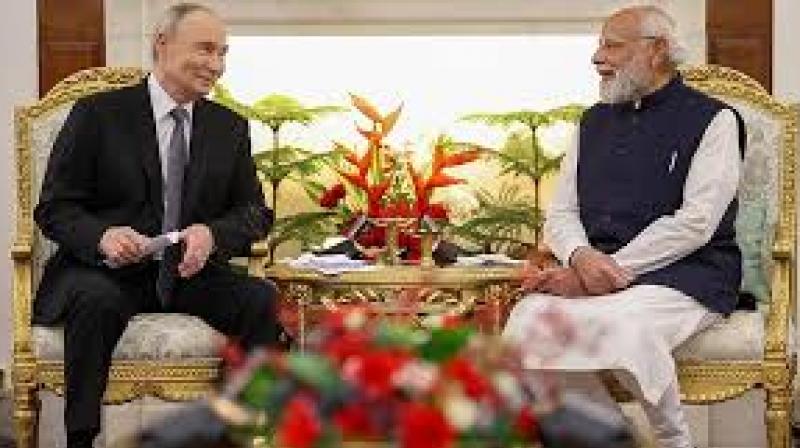
Vladimir Putin visits New Delhi on December 4–5 for the annual India-Russia summit. This is his first visit since the war in Ukraine reshaped global alignments.
The purpose of the talks is towards a recalibration of old loyalties and new dependencies. While India relies on Russian military hardware, over the years its procurement patterns have shifted significantly, from heavy dependence to a diversified approach combining Russian, Western, and domestic sources. But even as defence ties evolve, energy and trade with Russia have surged: cheap crude oil and other commodities have transformed Moscow from an arms supplier to a vital economic partner.
The agenda for the summit goes beyond symbolic diplomatic relationships. From the defence perspective, the two sides are expected to discuss next-generation air-defence systems—including offers around newer platforms that signal Russia’s desire to remain relevant in India’s strategic deterrence framework. Meanwhile, Russia’s parliamentary ratification of a defence-logistics agreement (RELOS), which would allow mutual access to military facilities and logistical support, highlights a renewed commitment towards long-term military cooperation.
On the economic front, Russia appears determined to shield its trade with India from growing pressure under U.S. sanctions. Kremlin officials have signalled that the summit will be used to “insulate” bilateral trade from external constraints, a move that has significant implications for India’s energy security and foreign-policy autonomy.
At the same time, there is clear recognition in New Delhi that its defence procurement can no longer rely only on Moscow. The diversification of suppliers – combining Russian legacy platforms, Western systems, and domestic manufacturing under a self-reliant defence push – reflects a more pragmatic and future-orientated strategy.
This visit may not only be about reaffirming ties, but it is an attempt to rewrite them. For India, the challenge will be to balance strategic autonomy, defence readiness and energy security — even while global geopolitics grows more uncertain. For Russia, it may be about safeguarding a long-standing partnership by adapting to new economic realities.
Source: Hindustan Times, NDTV