


The court also directed telecom regulators and intermediaries to fully cooperate.
Supreme Court Orders Pan-India CBI Probe into Digital Arrest Scam
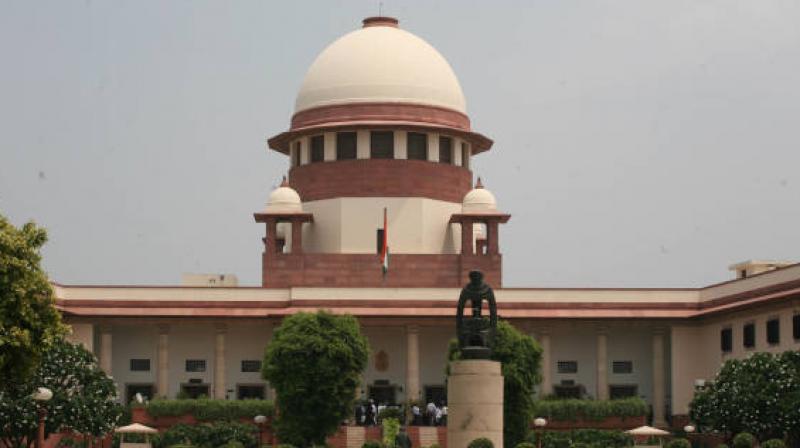
The Supreme Court of India has taken a major step in the fight against the rising digital arrest scams. It directed the Central Bureau of Investigation (CBI) to initiate a pan-India probe into cases of online fraud that exploit fear, judicial impersonation and virtual coercion. The court has granted CBI full authority to investigate the scammers and bank officials who may be associated by opening or allowing the misuse of accounts under the scam network.
The apex court asked every state, whether it is ruled by the ruling party or the opposition, to grant the CBI consent to investigate these crimes. The bench additionally gave a summons to the Reserve Bank of India (RBI) with an explanation on why advanced tools such as artificial intelligence or machine-learning systems were not being used to detect and freeze bank accounts involved in suspected cyber-fraud. The court also directed telecom regulators and intermediaries to fully cooperate: telecom operators were asked to curb issuance of multiple mobile SIMs to a single user, and technology-service intermediaries were asked to provide required data to assist investigations.
The Supreme Court also urged that state and Union-territory governments set up regional or state-level cybercrime coordination centres to better tackle such online offences. This reflects the court’s view that “digital arrest” scams involving forged judicial documents, fake arrest warrants and coercive calls are not isolated crimes but part of a wider, organised criminal enterprise crossing state and even international borders.
The above judgement brings both a warning and a ray of hope for the public. The caution is that criminal gangs are now misusing the gravitas of India’s highest court, deploying fake orders and intimidation to extort life savings, often from unsuspecting and vulnerable citizens. The hope lies in a strong institutional response: with the Supreme Court’s explicit backing, investigations can be more uniform, thorough and far-reaching, possibly to deter future fraudsters.
It’s important to amplify this message: if you receive an unexpected call that claims to be from a court or investigative agency with a warning of arrest or demanding immediate fund transfers, treat it with suspicion. Spread awareness and inform elders. Also, it is important to hold banking, telecom and regulatory authorities accountable for preventing the misuse.
It is more than a prevention from a scam story; it is a test of public trust in institutions, and the Supreme Court’s latest order offers one of the clearest signals yet that such abuse of judicial authority will no longer be tolerated.
Source: The Tribune