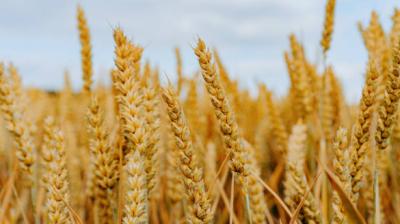



OL 16 has multiple advantages.
PAU’s Indigenous OL 16 Oats: Dual-Purpose Variety Boosts Fodder and Grain Yield in Punjab
Punjab Agricultural University (PAU) has developed OL 16, its first indigenous dual-purpose oats variety. Designed to deliver both high-quality fodder and superior grains, OL 16 has already attracted significant attention and is a milestone in India’s agricultural landscape. It has prompted the Government of India to place an indent for 36 quintals of its breeder seed, a testament to the strong demand for this locally developed crop.
According to Rahul Kapoor, principal breeder at PAU’s Department of Plant Breeding and Genetics, OL 16 is the first high-quality oats variety developed domestically. It has reduced dependency on imported seeds that currently dominate the market. Kapoor stated that “This variety provides farmers with a sustainable option that meets both nutritional and economic needs.”
OL 16 has multiple advantages. If it is harvested 65-70 days after sowing, the crop produces excellent fodder, yielding an average of 90 quintals per acre. If it is allowed to regrow, the medium-tall plants provide high-quality oat grains, averaging 7.6 quintals per acre. The variety is particularly valued for its nutritional value: it contains 5.5% beta glucan, surpassing the international standard of 5%, which makes it heart-friendly by binding with bad cholesterol.
PAU has dedicated 11 years to developing the OL series of oats, continuously improving the crop’s yield and nutritional content. While other newer varieties like OL 17 have been introduced, OL 16 is still preferred for its high glucan content and dual-purpose utility.
Satbir Singh Gosal, vice-chancellor of PAU, highlighted the transformative potential of such varieties. He emphasised that dual-purpose crops like OL 16 could significantly increase agricultural productivity and sustainability in Punjab. Gosal added that “These varieties go beyond traditional crops like wheat and paddy, offering farmers both economic and nutritional benefits.”
According to experts, with OL 16 now available for cultivation in Punjab, it could revolutionise oats farming in the region and empower farmers with a high-yield, nutritionally superior crop that supports both livestock fodder needs and grain production. The variety’s introduction signals a step forward in India’s aspiration of self-reliance in high-quality oats cultivation.
Source: Times of India