

The move highlights a swift action towards curbing air pollution risks throughout the year, rather than in episodes.
Air Quality Watch: CAQM Targets Summer Crop Residue Fires in Punjab, Haryana
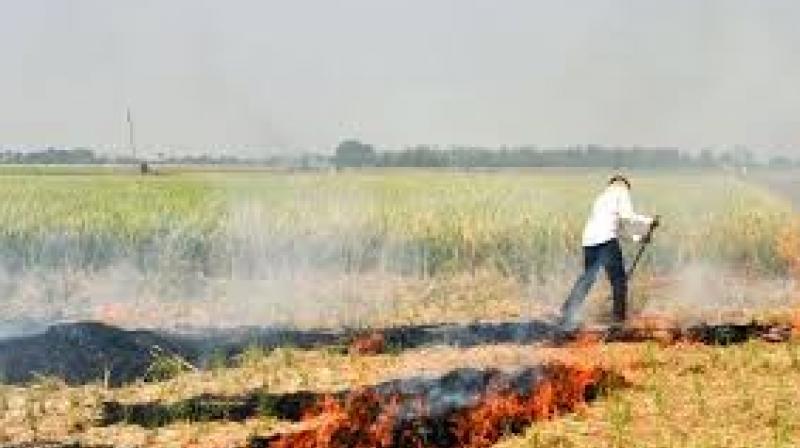
The Commission for Air Quality Management (CAQM) has directed the governments of Punjab and Haryana to monitor the burning of wheat stubble during the summer harvest at ground level. CAQM officials said that this is an expansion of scrutiny beyond the familiar October-November paddy stubble-burning season into the rabi cycle.
CAQM issued a letter on December 1, giving instructions to the states for submission of a “parali (crop-residue) action plan” which covers the wheat crop cycle ending before summer 2026. A senior CAQM official said that the watchdog highlighted the need for on-the-ground enforcement measures to eliminate farm fires during April–May, when winter wheat is harvested.
Since 2022, the Indian Agricultural Research Institute (IARI) has monitored wheat-residue burning through its Consortium for Research on Agroecosystem Monitoring and Modelling from Space (CREAMS) programme, using satellite data. As per IARI data for the wheat-harvest period (April 1–May 31, 2025), there were 10,207 fire events in Punjab and 1,832 in Haryana. IARI researchers said that other states recorded higher counts, such as 14,398 in Uttar Pradesh, 34,429 in Madhya Pradesh, and 49 in Delhi. The UP, MP and Delhi counts are the highest since monitoring began in 2022.
According to officials, CAQM’s outreach comes even as farm-fire incidents during the 2025 paddy season in Punjab and Haryana dropped to their lowest in years, marking substantial reductions, a result credited to enforcement, subsidised crop-residue management machinery, and awareness campaigns. However, despite that improvement, CAQM’s letter flagged both detected and undetected fire events and suggested significant gaps in compliance.
CAQM sources said that by extending surveillance to wheat stubble burning, CAQM appears to acknowledge that air-quality degradation in northwestern India and its impact on Delhi-NCR is no longer limited to post-paddy seasons. The move highlights a swift action towards curbing air pollution risks throughout the year, rather than in episodes.
The onus now lies on state governments and local authorities to demonstrate that machinery provision, alternate crop-residue-management options, and strict enforcement can together arrest both paddy and wheat-season stubble burning. Experts said that this is an essential step if seasonal dips in air pollution are to become permanent, rather than occasional, gains.
Source: The Indian Express