

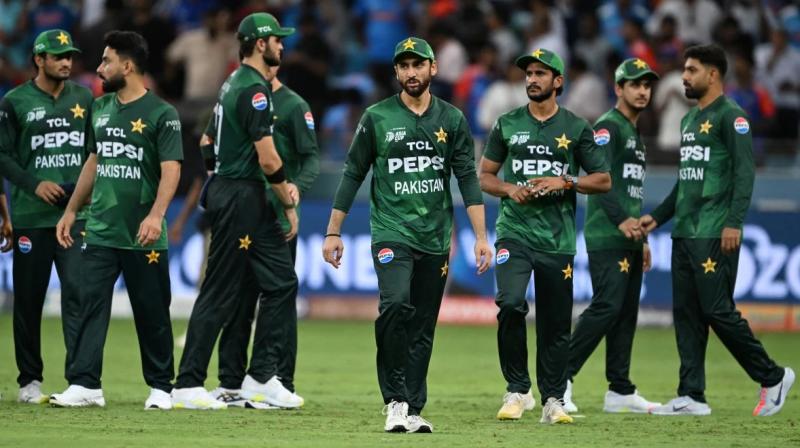
Apart from losing a share of the match revenue, Pakistan would also have to pay a hefty fine...
Sunil Gavaskar had predicted a week ago that Pakistan would definitely play the T20 World Cup match against India and would withdraw its decision to boycott the match. During a media interview, Gavaskar had said that Pakistanis have a habit of making U-turns and the names of more than a dozen Pakistani cricketers can be easily counted who, after saying goodbye to international cricket, announced their change of heart six-eight months later with as much fanfare as they did when they left the cricket field.
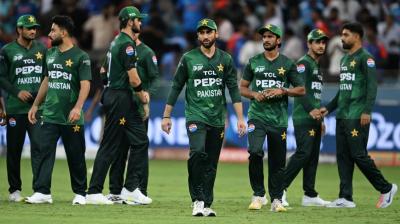
The first superstar of Indian cricket also named three cricketers who made U-turns within just two months of announcing their ‘retirement’ and two of them ‘retired’ not once, but thrice. Well, Pakistan has now taken such a U-turn again and has announced that they will definitely play a league match against India in Colombo on February 15. The two-day drama that preceded such a U-turn in the United Arab Emirates (UAE) and Lahore was merely to keep the Pakistani government safe. International Cricket Council (ICC) Vice-President Imran Khawaja arrived in Lahore. Following him, Bangladesh Cricket Board (BCB) President Aminul Rahman ‘Bulbul’ landed in Lahore in a specially chartered plane.
He appealed to the Pakistani government and cricket authorities not to sacrifice the interests of Pakistani and international cricket for the sake of ‘getting justice’ to Bangladesh. Then, Pakistan Cricket Board (PCB) Chairman and Home Minister Mohsin Naqvi stated that in view of the appeals of the Sri Lanka Cricket Board, that country’s President Anurag Dishanayake and the UAE Cricket Board, Pakistani Prime Minister Shahbaz Sharif is reviewing the decision to boycott the match with India.
In fact, it was not a review, but a bargain. The ICC wanted to avoid a rift in international cricket, but it had made it clear to the Pakistani board that if Pakistan boycotted the match with India, the loss would not be limited to losing two points. Apart from losing a share of the match revenue, Pakistan would also have to pay a hefty fine and would also have to face a one-year suspension from international cricket. Thus, the loss was not in the millions, but in the millions of dollars. It would have set Pakistani cricket back by at least five years.
The reality is that the loss was not only to Pakistan. The Sri Lankan board would also suffer a huge financial loss from the match boycott in the form of loss of income from ticket sales and loss of broadcasting rights income for that match. India-Pakistan matches are known as ‘heaps of illusion’ in international cricket. In case of this match not happening, the broadcasting rights company will not only suffer a huge financial loss, but the income of the ICC will also be directly affected. It is worth mentioning that after the International Football Federation (FIFA), the ICC is a sports organization that is earning billions of dollars in profits.
Therefore, this organization did not want its reputation and income to be directly affected. In fact, the real beneficiary during the entire process of bringing the India-Pakistan match back on track was the Bangladesh Cricket Board (BCB). In exchange for giving Pakistan an excuse to make a U-turn, the ICC is sure to exempt the BCB from the damages that were to be collected as a punishment for Bangladesh's decision not to play the World Cup.
However, while the principle of ‘all is well’ may be acceptable to all concerned by applying it to the India-Pakistan-Bangladesh conflict, this episode has shown to what extent cricket or other sports are dependent on the quality and nature of the cooperation of the neighbouring countries. The principle of keeping sports and politics separate is often stressed, but making such a separation possible is apparently not an easy task. However, the poisonous mentality of taking the bitterness of political relations to the sports field is not limited to the South Asian subcontinent; the US and other wealthy Western countries or powerful countries like China and Japan have also used sports boycotts as a political weapon. In such an environment, it is important to avoid the tendency to dress up sports competitions as battlefields as much as possible. Sports are an expression of a person's physical and mental well-being; they should not be used as a tool for political manipulation.