

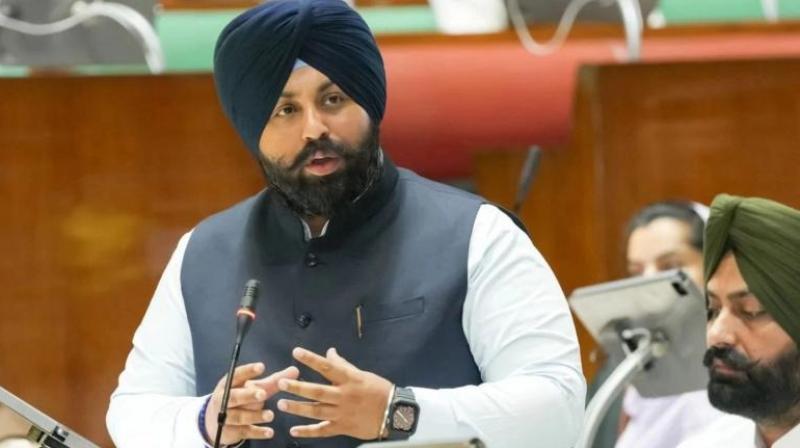
The leaders also reviewed the progress of the programme and outlined the road ahead.
Punjab to Introduce Anti-Drug Curriculum, Meditation Period in Senior Secondary Schools under ‘Yudh Nashean Virudh’ 2.0
The Punjab government is set to introduce a specially designed curriculum in senior secondary schools across the state in the upcoming academic session to sensitise students about the health impacts of drug abuse under the ‘Yudh Nashean Virudh’ campaign 2.0.
Teachers are also being trained under the second phase of the initiative.
The decision, aimed at addressing the roots of the drug menace, focuses on education and prevention through a school-centric action plan that will safeguard young minds and position schools and educators as the first line of defence in the state’s long-term fight against drugs.
Education Minister Harjot Singh Bains announced the decision during an interaction session with principals and teachers at a Capacity Building Training Programme under ‘Yudh Nashean Virudh’ at the School of Eminence in Phase 3B1, Mohali, recently. He was accompanied by former Delhi Deputy Chief Minister and architect of Delhi’s education revolution Manish Sisodia.
The leaders also reviewed the progress of the programme and outlined the road ahead.
Harjot Singh Bains noted that while action against drug smugglers continues, lasting victory would emerge only when children are prevented from falling prey to drugs beforehand.
“Education and prevention are our most powerful weapons in this decisive war on drugs. Guarding young minds through awareness, values and discipline is the only sustainable way to eliminate this menace from Punjab,” he said.
Under the initiative for schools, students will receive age-appropriate, factual and value-based education on the dangers of drugs, enabling them to make informed and responsible choices.
Minister Bains added that the state government will also introduce a daily ‘meditation period’ as a pilot project starting from Mohali district.
“A meditation session of around 30 minutes will be held at the beginning of the school day to strengthen students’ mental discipline, emotional balance and moral values. This will help children build inner resilience against negative influences,” he said.
Stressing the role of teachers and school leadership, the Education Minister said that capacity building of principals and educators was a crucial step.
“This training marks a powerful beginning. We are equipping our educators to identify early warning signs, intervene responsibly and guide children away from drugs. Our mission is to protect every child and to prepare them to become torchbearers in this fight,” he stated.
Additionally, a complaint-cum-suggestion box has been installed in schools to allow students to confidentially share information, without revealing their identity, about drug peddlers or any corrupt practices shielding them, the education minister said. He added that the inputs would be analysed at a centralised level and acted upon swiftly and independently to ensure accountability and effective action.
Former Deputy CM Manish Sisodia, in a post on X, said the teacher training under the initiative is focused on creating and sustaining a strong anti-drug environment within schools and on strengthening the mindset of every child.
“The objective is to ensure that this resolve becomes a permanent part of their character and stays with them throughout their lives,” Sisodia said.
He added that training programmes are being conducted across different districts, with psychologists and educationists engaging directly with principals to guide and train them.
Talking about the interaction session in Mohali, he said, “It was reassuring to see that the government is not only creating ‘pind de pehredaar’ but is also preparing ‘dimaag ke pehredaar’ to eradicate drug abuse from its roots and secure the future of the coming generations.”