


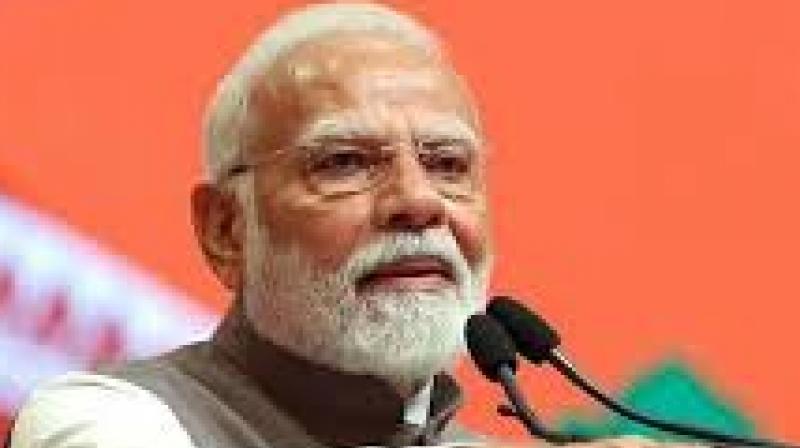
Modi evoked the historical memory of British colonial policy in his address.
Vande Mataram Row: Bengal, Congress, and Modi’s Parliament Speech Breakdown
On December 8, 2025, the parliamentary discussion on the 150th anniversary of Vande Mataram highlighted West Bengal for cultural reasons and political reasons. When PM Narendra Modi entered the Lok Sabha amid chants of “Bihar ki jeet hamari hai, ab Bengal ki baari hai” and “Vande Mataram”, it confirmed that the upcoming Bengal assembly elections are a subtext to the debate.
The main focus of the discussion was the song’s Bengali origin. The song was composed in Sanskritised Bengali during the 1870s by Bankim Chandra Chatterjee. “Bande Mataram” initially had six stanzas and was set to music by a Bengali composer. It later appeared in Chatterjee’s novel Anandamath, which was published in the 1880s.
Modi evoked the historical memory of British colonial policy in his address. He said that when the British carried out the 1905 partition of Bengal, their famous divide-and-rule tactic, "Vande Mataram stood like a rock." He further added that the British chose Bengal as their “laboratory” because of its intellectual strength, and by dividing Bengal, they believed they could divide the country.
The debate also focused on the reasons why only the first two stanzas of the song are now used officially, while the other four, which reference Hindu goddesses by name, are not in use. Modi accused the Indian National Congress (INC), especially under Jawaharlal Nehru’s leadership, of yielding to demands from the Muslim League, which he said feared the song could “irritate Muslims”. In 1937, the Congress Working Committee meeting in Kolkata “partitioned” Vande Mataram when it selected only the first two stanzas. Modi referred to this as the beginning of a pattern of “appeasement politics”, which, according to him, eventually contributed to the 1947 partition of India.
Congress leaders countered that the full song was never part of the official national song; rather, the adoption of only the first two stanzas dates back to 1937, and it was accepted and formalised when the Constitution recognised Vande Mataram as the national song in 1950.
Also, the parliamentary context with recurrent references to Bengal’s political significance and upcoming state elections has led opponents to accuse the government of politicising a sensitive cultural and national symbol.
The debate on Vande Mataram has resurfaced longstanding questions about history, religion, identity, and nationalism, with the politics of a poll-bound Bengal giving fresh urgency to a controversy dating back nearly a century.
Source: Hindustan Times