

Pakistan declares 'open war' against Afghanistan
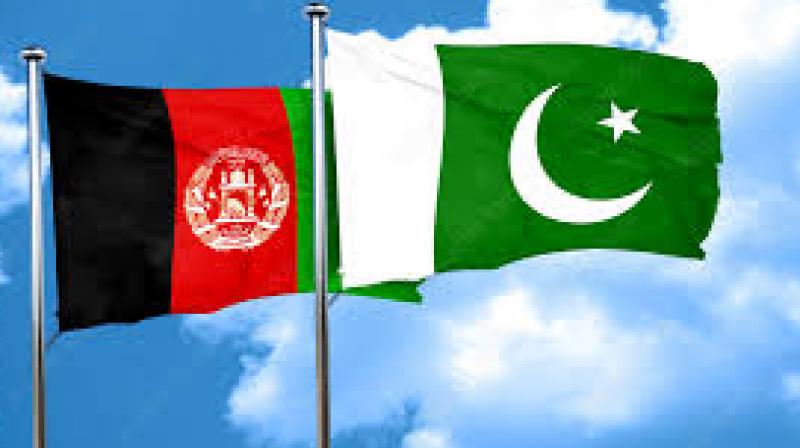
Pakistan has declared an 'open war' against Afghanistan, plunging the South Asian subcontinent into yet another bloodbath. The attack on Pakistani border posts along the Durand Line by Afghan Taliban forces on Thursday and the retaliatory bombing of Afghan military and civilian installations in Kabul, Kandahar and Paktia by the Pakistani Air Force on Friday have transformed the bilateral conflict from limited border clashes to outright fighting.
Pakistan on Thursday claimed to have 'neutralized' seven Taliban border posts. The Taliban in response claimed to have damaged two Pakistani military camps and 19 posts and shot down a Pakistani fighter jet. The Afghan government has put the number of Pakistani soldiers killed in border clashes at more than 55, while Pakistan has admitted the 'martyrdom' of seven soldiers and claimed to have killed more than 150 Taliban.
The Afghan government has also announced that a drone strike has caused heavy damage to a military building called 'Atomic' in Islamabad, about which Pakistan has not commented. Although Iran, China and some Gulf countries, especially Oman, have started maneuvers to stop the war, the Pakistani leadership's rhetoric still reflects that it is implementing a strategy of 'teaching a lesson' to the Afghan Taliban. Pakistani Prime Minister Azam Shahbaz Sharif said in a government decree on Friday that "Pakistan's patience had run out. That is why it has embarked on the path of ending the 'dictatorship' of the Taliban."
There is no doubt that Pakistan is much more powerful than the Afghan Taliban in terms of military power. Its army has about 6.60 lakh soldiers and more than 400 tanks and other sophisticated military equipment in large numbers. On the other hand, the strength of the Afghan army is said to be around 1.72 lakh. It certainly has sophisticated weapons, but the chances of having adequate ammunition are moderate. The forces of the US and 'NATO' countries left behind many tanks, armored vehicles and missile launchers when they left Afghan soil in 2021, but the Afghan soldiers do not have the skills to use this expensive military equipment.
At the same time, due to the fact that no country has recognized the Taliban government at the international level, the Afghan soldiers lack the necessary training to use new inventions. The Pakistani government has been constantly accusing India of supplying weapons and providing military training to the Taliban in order to create instability in Pakistan. But it has failed to present evidence in favor of such allegations.
The current crisis has arisen over the past two and a half years from Pakistan’s demand that the Afghan government close down the camps of the Tehreek-e-Taliban Pakistan (TTP), a terrorist organization active in Pakistan, inside Afghan soil and hand over the leadership of the terrorist elements to Pakistani security agencies. On the other hand, the Afghan government has been denying the allegations that the TTP camps are inside its borders. After several ultimatums related to the above demand, Pakistan bombed Afghan soil in October 2025. The Afghan Taliban, calling it an act of aggression, had responded with ground clashes. At that time, the war was stopped with the intervention of Turkey and some other Islamic countries, but this month, the bombing by the Pakistani Air Force in the two border Afghan provinces of Nangarhar and Paktika last week also put the Afghan Taliban on the path of retaliation.
It is true that Pakistan can outsmart the Afghan Taliban in the battlefield with the help of sophisticated weapons and war material received from the US and China, but it is not easy for Pakistan to confront the extremely dangerous fighters that the Afghan Taliban have in the form of suicide bombers. In the current situation, the Pakistani army's entanglement on the western border may be a matter of convenience for India, yet siding with the Afghan Taliban in this war is not in India's interest internationally.
That is why the Indian government, while supporting other countries' calls for an immediate ceasefire, has also adopted a middle-of-the-road approach, calling the Pakistani bombing of Afghan refugee camps in Torkham and Paktika 'brutal'. The Afghan Taliban are Pakistan's own creation. Pakistan had been promoting their return to power in 2021 as its major strategic achievement. Now, this same group is starting to seem like an enemy to it. The 'if you sow poison, you will reap poison' approach that has become Pakistan's fate is a warning lesson for other countries as well.