

He, along with many other jurists, are of the opinion that bail is not a charity under the Indian Constitution, but a legal right...
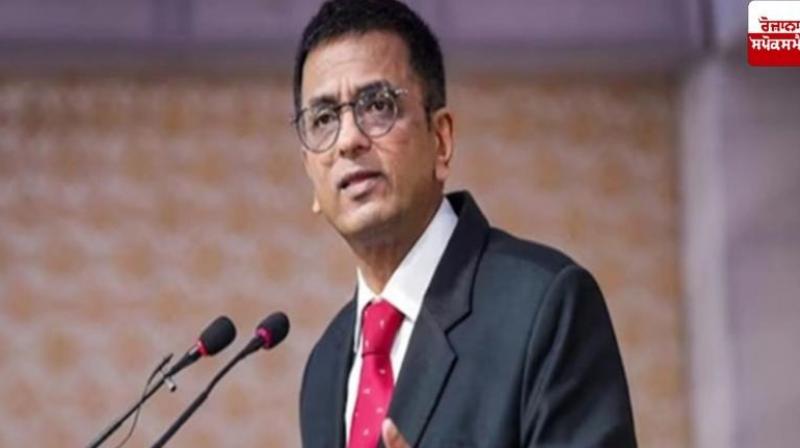
How the 'jail instead of bail' tradition was reduced, Editorial: Former Chief Justice of India D.Y. Chandrachud has advocated the release of the accused on bail in case the pace of trial of any criminal case is slow. He also says that if the trial of any accused is not started within six months of his arrest, then that accused should also be considered eligible for release on bail. Justice Chandrachud made these comments in the context of the detention of 2020 Delhi riots accused and social activist Umar Khalid.
Khalid has been under detention since 2020. The case against him is still at an early stage. Recently, a two-judge bench of the Supreme Court had rejected the bail applications of him and another activist Sharjeel Imam on the grounds that the material collected by the prosecution (government) against both of them shows the charges against them to be very serious. In view of this, both of them cannot be released on bail. However, the apex court made it possible to release five other employees on bail in the same case involving both of them on the grounds that the charges against them are not so serious that they should be kept in detention for longer.
During a question-and-answer session on the topic of “Concept of Justice” at the Jaipur Literary Festival, Justice Chandrachud found it appropriate to express his displeasure indirectly, instead of making any direct comment on the above decision of the Supreme Court. Dozens of eminent legal experts and jurists have also expressed such displeasure. Some have even called this decision outright wrong. Now the former Chief Justice's expression of thought points to the flaws in our judicial system. It is worth mentioning that Khalid and Sharjeel are under detention under the National Security Act (NSA) and the provisions of the 'Unlawful Activities Prevention Act' are applicable on them. These laws are very strict and make detention, release on bail very difficult.
But Justice Chandrachud's position is that, despite the strictness of the legal provisions, the context and background of every case should also be kept in mind. That is why the judiciary; especially the High Courts and the Supreme Court should take their decisions according to the demands of justice, and not just by becoming slaves of the legal provisions.
Such comments are welcome, but does the principle of 'prison is preferable to bail' seem relevant and appropriate in Indian conditions? Does Justice Chandrachud's own judicial record provide evidence of his commitment to adhering to the above principle? The former Chief Justice claims that he disposed of 24,000 bail applications during his tenure as Chief Justice.
He, along with many other jurists, are of the opinion that bail is not a charity under the Indian Constitution, but a legal right of every accused. Courts should keep the above ‘constitutional truth’ in mind while hearing bail applications. Bail is not generally granted on the basis that the accused may destroy evidence related to the case, or may force witnesses to deny the charges by intimidation or bribery, or may abscond and/or may commit another offence. All such apprehensions or fears should be assessed on the basis of the criminal record or financial status of the accused; not on the basis of the arguments or assumptions put forward by the prosecution (plaintiff).
But in reality, such an assessment rarely takes place within the courts. The lower courts often do not grant bail applications under government or public pressure. The same thing happens in the high courts too. The cases eventually reach the Supreme Court. The Supreme Court has been disposing of an average of 70,000 such appeals every year. India and Brazil are the only two countries where this trend is increasing instead of decreasing.
This is the reason why the ‘bail instead of jail’ principle dominates our judiciary. Due to this principle, people are distrusting the judiciary. The former Chief Justice also called on the courts to show more scrutiny in cases related to national security. He says that the laws related to the protection of national security have completely overturned the judicial principle of ‘innocent until proven guilty’. According to the above laws, the ‘guilty until proven innocent’ principle demands more responsibility and dedication from the courts.
The courts should strictly guard against the above requirement for the strength of the judiciary. Similarly, the courts also need to be alert against the practice of preventing political opponents from getting bail by filing charge sheets of 20-30 thousand pages. Overall, the issues raised by Justice Chandrachud through his views also point towards the weaknesses and loopholes in the judiciary and also towards the measures to reduce or remove these weaknesses and shortcomings.
One thing is clear that while public confidence in the administration of justice at the district level can be strengthened by making it smooth and pressure-free, the burden on the higher courts can also be reduced. To do this, the initiative should be taken by the apex court and also by the Ministry of Law and Justice.
(For more news apart from “Editorial: How the 'jail instead of bail' tradition was reduced," stay tuned to Rozana Spokesman.)