

The forecast of 6.15 percent growth in Indian exports is good news.
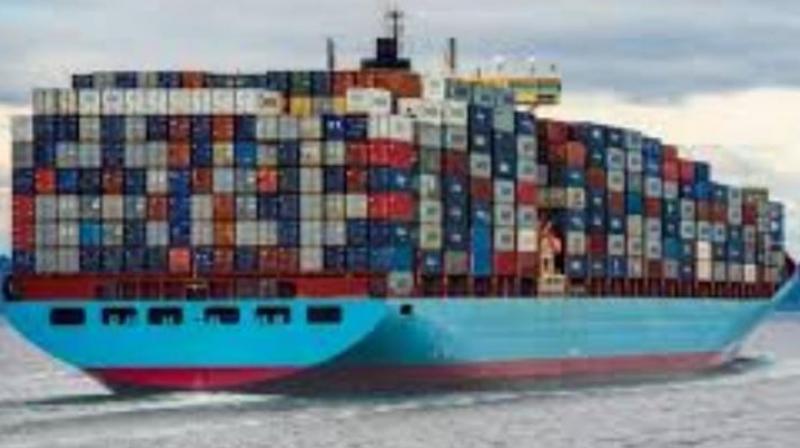
Editorial: Despite the volatility in the global trade world, the forecast of 6.15 percent growth in Indian exports during the current financial year is good news. According to the information given to the media by Union Commerce Secretary Rajesh Agarwal on Monday, Indian exports of goods and services will reach a value of $ 860 billion during the current financial year (2025-26). This amount will be a record in itself. Government data shows that exports worth $ 720.76 billion were realized during the first 10 months (April-January) of the financial year 2025-26. On this basis, the Ministry of Commerce has predicted that the growth rate will continue during the remaining two months as well. The bright side of this situation is that despite the decline in demand for Indian goods in the US due to the punitive tariff of 50 percent (25+25) imposed by US President Donald Trump on Indian exports, Indian exports to other countries have maintained their growth trend. In particular, the sustained growth rate of 2.2 percent in merchandise exports (i.e. electronics, textiles, garments, machinery and agricultural products) reflects the fact that the Indian economy is on a solid footing and Indian goods are of such high quality and price that even China has not been able to destroy their market. After the India-US trade agreement, which was concluded a few days ago, the US administration has reduced the tariff on Indian exports to that country from 50 percent to 18 percent, but this announcement is yet to be implemented. Before the US, India has also signed a trade agreement with the European Union (EU). The detailed implementation of that will also start from April itself. Only when such a process is actually implemented will it be clear how much Indian exports to the European continent will increase. The Indian team has currently reached Washington DC to remove the silhouettes of the trade agreement with the US and determine the tariff on an item-by-item basis. It is believed that the Indian team will be successful in removing the confusion as to which products will be able to enter the US duty-free, which will be subject to preferential tariff and which will be kept in the 18 percent tariff bracket. It is worth mentioning that even during the period of 50 percent tariff, the principle of 'zero tariff' (no tariff) was applicable on Indian medicines, many types of electronic goods and heavy machinery. This was also an important reason why (despite high tariffs) Indian exports to the US did not experience a significant decline. Even now, even though the US will levy 18 percent tariffs on many Indian products, the list of zero-tariff items will not be very small.
When the US administration imposed a 50 percent tariff on Indian products from August last year, many economic experts had advised that instead of mourning the US decision, Indian industries should accept the above decision as a challenge and explore new markets to sell their goods. It seems that many industries have sincerely followed the above advice and increased their business with the countries of the South American continent. The increase in exports in terms of number and value so far shows that the difficulty of exploring new markets has immediately benefited Indian manufacturers and industries.
Like exports, Indian imports have also been on an upward trend. India is dependent on foreign producers for crude oil, a weakness that is not hidden from anyone. 90 percent of India's petroleum needs have been met by foreign countries. It is because of such imports that the large gap between the value of imports and exports has persisted since the 1970s. In January 2026, this gap was as high as 19.7 percent. The main reason for this increase during the current year is the fluctuation in crude oil prices as well as the rising trend in gold and silver prices. Although this surge is now decreasing somewhat, India's weakness in hoarding gold has maintained the rise of gold in the Indian bullion market. Overall, the trends that have been going on should give us some comfort that despite the difficulties, the Indian economy has not faltered. Its strength remains intact. In such a situation, it is also the duty of the Modi government to reverse the trend of economic benefits being confined to a limited number of sections. It should be ensured that these benefits reach all sections of the society in equal proportion, not just one.