


The only opposition was made by BJP member Ashwani Sharma, who is also the working president of Punjab BJP.
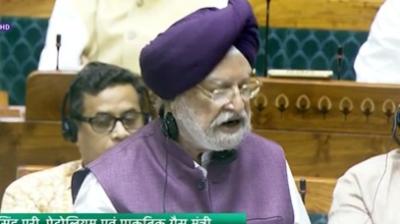
Punjab Vidhan Sabha session 2025: The Punjab Vidhan Sabha on Tuesday passed a resolution unopposed against the implementation of the ‘G-Ram-G’ scheme in place of ‘MGNREGA’. The state government had called a one-day session of the Vidhan Sabha for this purpose. During this session, the opposition Congress openly criticized the ruling Aam Aadmi Party (AAP) on ‘MGNREGA’, but did not oppose the resolution.
The only opposition was made by BJP member Ashwani Sharma, who is also the working president of Punjab BJP.
Taking advantage of political maneuvering, he thought it better to walk out during voting on the resolution. During the discussion on the resolution, Chief Minister Bhagwant Mann and his fellow ministers, apart from other speakers of the ruling party, also lashed out against the central government. He called the Modi government anti-Dalit and accused it of “a well-planned conspiracy to snatch the livelihood of Dalit workers” and directly destroying the federal structure of the country. The Chief Minister claimed that the naming of the Rural Employment Guarantee Scheme as ‘VB-G-Ram-Ji’ is a ploy to snatch the right of employment from rural Dalit workers.
Similar views were expressed by other speakers. The resolution passed demanded that the new scheme be withdrawn and the old ‘MGNREGA’ scheme be restored in its original form. Punjab has taken the initiative in opposing the ‘G-Ram-Ji’ scheme in this way. It is possible that other states ruled by opposition parties will also adopt a similar strategy. It is a different matter that other states have not yet given any clear information about their future strategy. However, the significance of the resolution passed by the Punjab Vidhan Sabha unopposed is legally symbolic. State Assemblies cannot repeal any law passed by Parliament. Yes, they can certainly challenge the legality of such laws in the Supreme Court. That is why many legal experts have been expressing the opinion that instead of getting the resolutions passed by the Assemblies, a judicial challenge may prove more effective.
In view of this reality, Punjab BJP President Sunil Jakhar had called the AAP government’s move to call a special session of the Vidhan Sabha as ‘event management’. However, despite such criticism being justified to some extent, one fact is that the way in which the Modi government has been imposing every important legal step on the entire country is both wrong and a violation of constitutional norms. It is the central government's duty to take the states into confidence and give due consideration to their objections before taking steps that undermine their interests and rights or put an undue burden on their exchequer. Such sense of duty or sensitivity is missing from the Modi government's behavior. Punjab has two main objections to 'G-Ram-Ji': the naming of the scheme and the 60:40 percent ratio of wages to be paid to the employables. Under 'MGNREGA', the entire wage fixed by the center was paid by the central government.
The state government could have increased that amount and paid it to the beneficiaries according to its financial capacity. Now the center has to pay 60 percent and the remaining 40 percent has to be paid by the state government. Due to this ratio, many other central schemes have already stalled in half the states of the country because the state governments are either not in a financial position to pay the 40 percent share or they are resorting to political blunders. The ‘MGNREGA’ scheme was quite popular during the initial years of its launch by the UPA government in 2005, but its success waned after 2010. Apart from scandals like corruption and forgery, the scheme has never been able to achieve the target of 100 days of employment every year.
In this regard, the national average has been between 45 and 50 days. In Punjab, it has come down to 30 days. One reason for this is that the daily wage under ‘MGNREGA’ in Punjab is around Rs 313 while in Haryana it is from Rs 357 to 388. The low wages and allegations of bias at the Panchayat or political level have prevented the Rural Employment Guarantee Scheme from proving effective and successful. In such a situation, the resolution in the Legislative Assembly is certainly a sign of legislative opposition, not a great political achievement.