


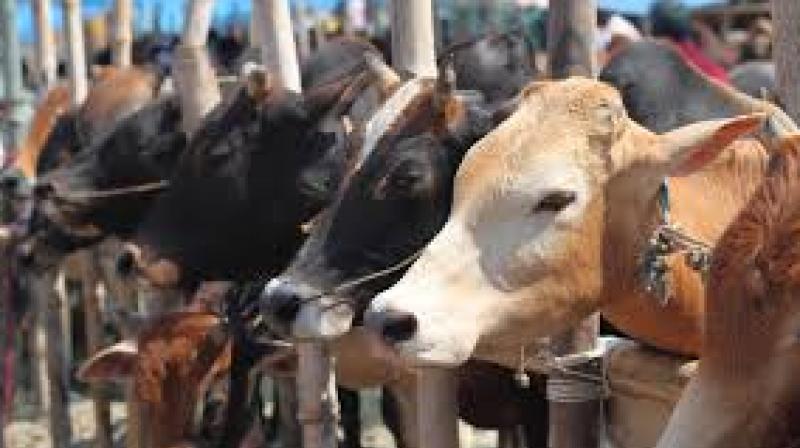
Beyond cattle, the affidavit outlined Punjab's broader animal population.
Punjab Dumps Over 24,000 Cattle Carcasses Monthly at 5,500+ Unregulated Sites: NGT Audit
According to an affidavit submitted by the Punjab government to the National Green Tribunal (NGT), a major audit of livestock management in Punjab has revealed serious environmental and regulatory failures in how the state handles the disposal of animal carcasses.
The audit was ordered by the NGT following a petition by Army veteran Colonel Jasjit Singh Gill, who raised concerns about significant delays in establishing a formal carcass disposal facility in Ludhiana. The findings reveal that over 24,000 cattle carcasses are being discarded every month across 5,541 sites in the state, the vast majority of which are unregulated and managed by private individuals without government oversight. Only 24 of these sites are within urban local bodies, while the remaining 5,517 are in rural areas, highlighting a near-complete reliance on informal practices.
Punjab has an estimated 70 lakh livestock, including approximately 65 lakh cows and buffaloes, which contribute heavily to the carcass burden. Among districts, Ludhiana leads in livestock fatalities, with an average of 2,206 carcasses per month, while Hoshiarpur has the largest number of dump sites at 660.
The NGT emphasised a regulatory vacuum, observing that rural disposal is largely unmanaged, unlike urban areas that are gradually moving toward modern rendering plants. The state’s carcass generation figures were modelled on veterinary mortality estimates from Maharashtra’s Pune division and adapted for Punjab’s livestock density.
Beyond cattle, the affidavit outlined Punjab’s broader animal population, including sheep, goats, pigs, horses, and millions of poultry birds, stray cattle and dogs, compounding environmental stress. The NGT warned that current practices risk groundwater contamination and disease spread and urged the state to urgently formalise disposal infrastructure to replace unregulated dumping.
Source: Times of India