


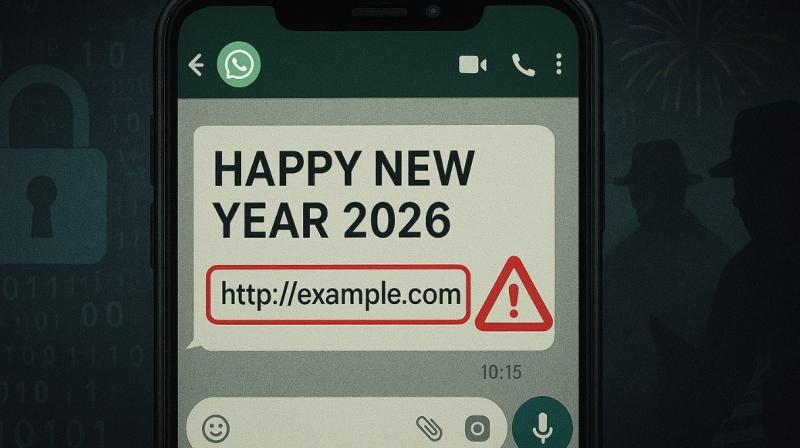
A single click on a malicious New Year greeting can compromise not just the phone, but also lead to significant financial loss.
New Year WhatsApp Scam: Messages That Could Empty Your Bank Account
As New Year 2026 approaches, cybersecurity experts across the nation are warning citizens about a rising cyber scam disguised as festive greetings on social media platforms like WhatsApp and Telegram. Scammers are sending seemingly harmless “Happy New Year” messages that can actually lead to malicious software being installed on users’ phones, potentially putting their bank accounts at risk.
According to cybersecurity experts, the scam begins when a user receives a WhatsApp message containing an APK file disguised as a New Year greeting. An APK (Android Package Kit) is a file format used to install applications on Android devices. The message may look festive, but once the file is clicked and installed, it allows attackers to gain unauthorised access to the victim’s phone including contacts, personal data, messages, and critically, banking applications and credentials.
Experts have cautioned that these messages do not always come from unknown numbers. Because attackers often compromise legitimate WhatsApp accounts, the dangerous greeting may appear to come from known contacts; this increases the likelihood that unsuspecting users will open the file. Cybersecurity experts said that trusting a message because it comes from a contact is not safe if the account itself has been compromised.
Security authorities recommend that users never install APK files received via messaging platforms, especially outside of official app stores like Google Play. Users are also advised to disable sideloading on Android devices to prevent installation of apps from unknown sources. iPhone users are not susceptible to APK installation, but links can still pose other risks and should be treated with caution.
A single click on a malicious New Year greeting can compromise not just the phone, but also lead to significant financial loss. Experts urge users to remain vigilant during festive seasons when such scams tend to proliferate.
Source: Hindustan Times