

The mission marks a significant moment in India's growing role in the global commercial space market.
ISRO Launch Countdown Begins: BlueBird Block-2 Satellite Set to Deliver Global Mobile Connectivity
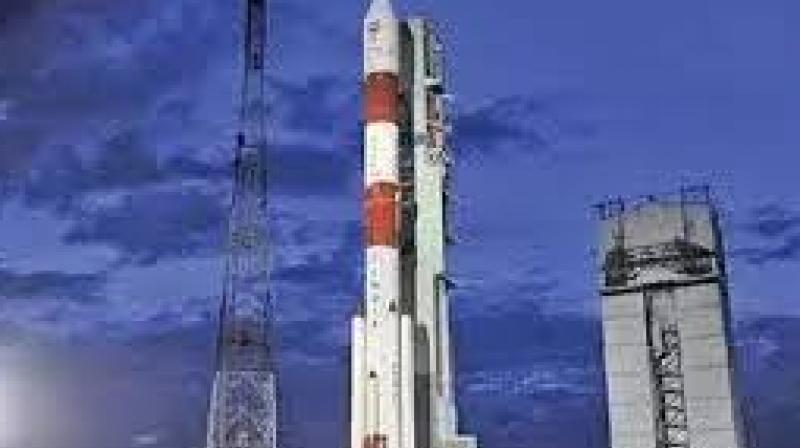
According to officials on Tuesday from Sriharikota, the Indian Space Research Organisation (ISRO) has commenced the 24-hour countdown for the launch of its LVM3-M6 mission, which will carry the BlueBird Block-2 communication satellite.
ISRO sources said that it is scheduled for 08:54 AM on Wednesday from the Second Launch Pad at the Satish Dhawan Space Centre. The mission marks a significant moment in India’s growing role in the global commercial space market. The LVM3, which is also known as the Geosynchronous Satellite Launch Vehicle Mark III, is ISRO’s heavy-lift launch vehicle and has been used for significant missions, reflecting India’s robust launch capability.
The BlueBird Block-2 satellite will be the heaviest payload ever placed, weighing approximately 6,100 kg, into Low Earth Orbit (LEO) by an LVM3 mission in ISRO’s history, surpassing the previous record of around 4,400 kg set by the LVM3-M5 Communication Satellite 03 launched in November.
This mission is being carried out under a commercial agreement between NewSpace India Ltd (NSIL), the commercial arm of ISRO, and US-based AST SpaceMobile, Inc., officials said. It marks another milestone in international space collaboration. BlueBird Block-2 is designed as a next-generation communications satellite intended to provide high-speed cellular broadband connectivity directly to smartphones worldwide, including voice, text, video and data services, the engineers explained. The constellation to which this satellite belongs focuses on expanding direct-to-mobile connectivity from space, particularly important for areas lacking terrestrial network coverage.
ISRO Chairman V Narayanan offered prayers at the Sri Venkateswara Swamy Temple in Tirumala on December 23, highlighting the blend of technological ambition and national ethos surrounding the mission.
Officials said that the LVM3’s design incorporates powerful S200 solid rocket boosters developed by the Vikram Sarabhai Space Centre, and the mission is expected to see the satellite separate from the vehicle about 15 minutes after liftoff.
If successful, this launch will strengthen ISRO’s position as a reliable provider of commercial launch services and accelerate the deployment of space-based global connectivity networks.
Source: Hindustan Times