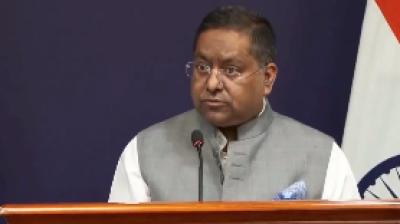



The bill redraws the regulatory landscape by legally tying transparency and accreditation to institutional autonomy.
New Bill Signals Tougher Regulation of Universities, Heavy Fines for Rule Breaches
The Indian government has initiated a major policy shift in regulating higher education by introducing a stringent penalty framework for institutions. It marks a departure from the traditionally advisory nature of regulation toward a statutory enforcement model.
The proposed Viksit Bharat Shiksha Adhishthan Bill, 2025, placed in the Lok Sabha on Monday, December 15, 2025, embeds graded penalties into law for the first time. Under this framework, higher education institutions found violating regulatory provisions could face fines ranging from INR 10 lakh up to INR 75 lakh. It depends on the severity and recurrence of violations. In extreme cases, regulators have the authority to recommend suspension of degree-awarding powers, withdrawal of affiliation, or even institutional closure.
According to officials, a particularly significant provision targets unauthorised institutions, those operating without required approval from either the Central or relevant state governments. Such entities could be slapped with a penalty of up to INR 2 crore and face immediate shutdown, a marked escalation from earlier regimes where fake or unapproved universities often continued operations with limited legal consequences.
As per the provisions of the proposed legislation, the law also mandates safeguards for enrolled students. It ensures penalties are implemented in ways that do not disrupt ongoing academic progress or disadvantage those currently studying and enrolled at affected institutions.
The bill redraws the regulatory landscape by legally tying transparency and accreditation to institutional autonomy. Institutions will be required to publicly disclose detailed information such as financials, audits, faculty profiles, infrastructure, courses, outcomes, governance structures, and accreditation status. False or misleading disclosures could trigger regulatory action, and regulators are obliged to act within defined timelines.
Officials said that high-performing institutions may unlock greater autonomy, including the ability to confer degrees in their own name, aligning with the goals of the National Education Policy 2020 to encourage multidisciplinary growth and reduce the burden of over-affiliation.
According to policy experts, this legislative move is a decisive pivot toward accountability and quality assurance in Indian higher education. It balances enforcement with protections for student interests in a sector long criticised for regulatory gaps.
Source: Times of India