

Additionally, Haryana will establish a system to monitor and control wastewater flow into the Masani barrage.
INR 450 Crore Plan to Tackle Haryana-Rajasthan Pollution Crisis
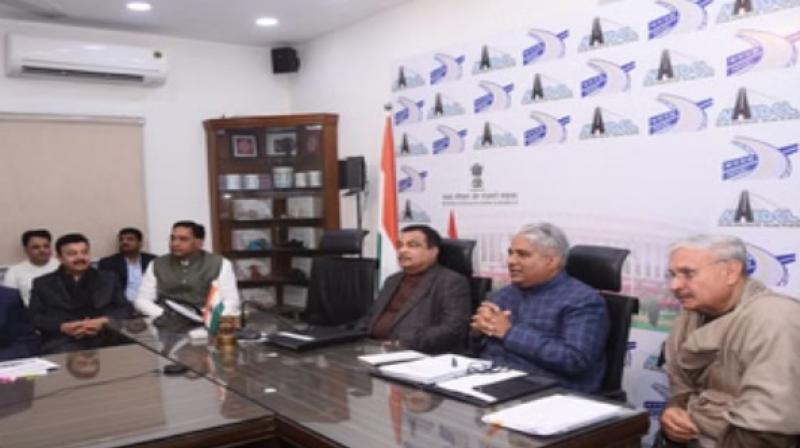
On Tuesday, Union Road Transport Minister Nitin Gadkari chaired a crucial meeting in New Delhi to address the pollution issue caused by the flow of chemical-laced wastewater from Bhiwadi (Rajasthan) into Dharuhera (Haryana) and the discharge of polluted water from Haryana cities into the Masani barrage.
Rajasthan Chief Minister Bhajan Lal and Union Ministers Rao Inderjit Singh and Bhupender Yadav attended the meeting. Rao Inderjit Singh raised concerns about the continuous flow of polluted industrial water from Bhiwadi into Haryana. He highlighted that a barrier built by Haryana to stop this flow was broken overnight, allowing harmful chemicals to accumulate in Dharuhera for over 10 days, threatening local residents.
Construction of a 6-km drain along the Delhi-Jaipur National Highway to channel rainwater from Bhiwadi during the monsoon season was proposed as a solution. The cost of the project will be shared equally by Haryana and Rajasthan, with the Ministry of Road Transport covering the remaining expenses. Additionally, Haryana will establish a system to monitor and control wastewater flow into the Masani barrage. The total cost of both projects is estimated to be INR 450 crore.
Environment Minister Bhupender Yadav announced that a 40 MLD Sewage Treatment Plant (STP) in Bhiwadi would be operational by March, along with a Common Treatment Plant (CTP) to address the industrial wastewater concerns. Rajasthan Chief Minister Bhajan Lal assured the completion of the STP by March and sought Haryana’s cooperation in managing the flow of polluted water into the Masani barrage. He emphasised the challenge posed by the natural slope towards Dharuhera, especially during the monsoon season.
Minister Gadkari stressed the need for a permanent solution to prevent future issues. He recommended that polluted water be treated in Bhiwadi and reused by local industries and farmers, urging both states to collaboratively tackle the growing pollution crisis.
Source: The Tribune