

The recognition highlights PAU's contributions to sustainable crop development and the adaptation of crops to specific agro-climatic zones.
PAU Achieves National Recognition for High-Yield Oats Boosting Fodder Production
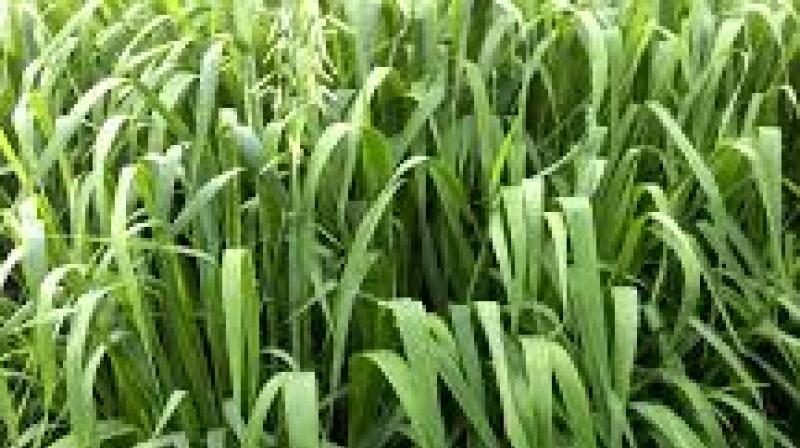
Punjab Agricultural University (PAU) has secured national-level recognition for three high-yielding oat varieties: OL 1964, OL 1967-1, and OL 1975.
The announcement came following the Varietal Identification Committee (VIC) meeting, chaired by Dr SK Pradhan, Assistant Director General (Food and Fodder Crops), ICAR, New Delhi. The recognition highlights PAU’s contributions to sustainable crop development and the adaptation of crops to specific agro-climatic zones. These varieties were tested over three years and are expected to deliver higher productivity and improved disease resistance, benefiting dairy farmers across India.
The OL 1964 variety is a single-cut type suitable for irrigated areas in the central zone, including Uttar Pradesh, Madhya Pradesh, Chhattisgarh, Maharashtra, and Gujarat. It produced an average green fodder yield of 492.4 quintals per hectare, 3.5% and 10.1% higher than national and zonal checks, respectively, with moderate resistance to leaf blight and 10% higher crude protein than the national check.
OL 1967-1, a dual-cut variety for irrigated areas in the Northeast Zone, recorded 235.2 q/ha green fodder yield, 13.9% and 21.3% higher than national and zonal checks. It shows moderate to high resistance to Helminthosporium leaf blight and high resistance to Sclerotium root rot, also outperforming the national check in seed yield.
OL 1975 is a multi-cut variety for the Hill Zone, including Jammu and Kashmir, Himachal Pradesh, and hill regions of Uttarakhand. It produced 243 q/ha green fodder yield, higher than national and zonal checks, and surpassed the national check in dry matter, crude protein, and seed yields.
Dr SK Sandhu of PAU emphasised that these varieties will support fodder and grain needs while strengthening sustainable agriculture.
Source: The Tribune