

Experts and scientists underscored how the combination of rice's high water requirement and government incentives has worsened the situation
India Surpasses China in Rice Production, But Punjab-Haryana Farmers Battle Water Shortage
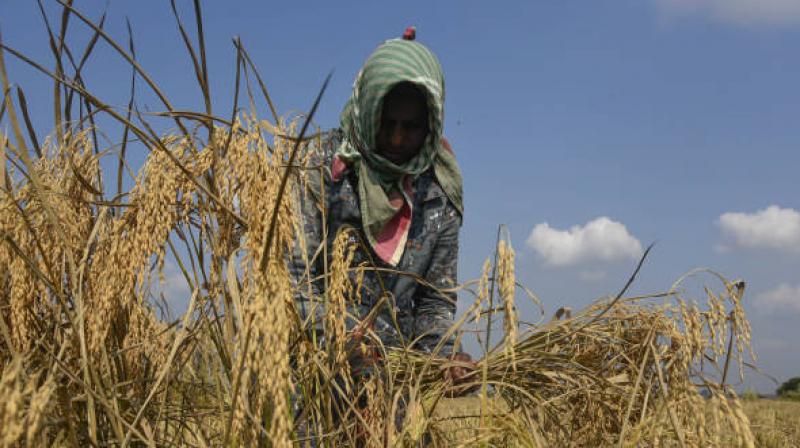
India has surpassed China as the world’s largest rice producer this year, with shipments reaching over 20 million metric tonnes in the latest fiscal period, which is almost double the exports of a decade ago. Despite the national achievement and political praise for farmers and agriculture policy, many growers in key northern states are unhappy and concerned about the long-term sustainability of rice farming.
In the rice-producing heartlands of Punjab and Haryana, farmers said that falling groundwater levels are creating a financial and environmental crisis. Groundwater that was easily accessible at around 30 feet a decade ago now requires borewells of 80–200 feet or more, forcing growers to invest more in deeper drilling, longer pipes and more powerful pumps just to sustain rice cultivation. Many farmers reported that rising extraction costs are pushing them toward the brink of economic strain.
Experts and scientists underscored how the combination of rice’s high water requirement and government incentives has worsened the situation. A kilogram of rice can consume 3,000–4,000 litres of water, significantly more than the global average, which accelerates aquifer depletion. Government subsidies, including rising minimum support prices and heavy power subsidies that make irrigation cheaper, continue to encourage rice cultivation instead of more sustainable alternatives.
Policy efforts to shift cropping patterns have begun, such as a Haryana government incentive of INR 17,500 per hectare to promote millets, which require much less water. However, farm economist Ashok Gulati argued that one-year incentives are not enough to induce long-term change; he recommended at least five-year support schemes to make diversification viable for farmers.
Local farmers said they would be willing to switch to less water-intensive crops if guaranteed that the government would buy those crops at supportive prices, preserving their incomes. But without sustained policy support, most growers fear continuing with water-intensive rice farming will increasingly undermine their livelihoods.
Source: The Tribune