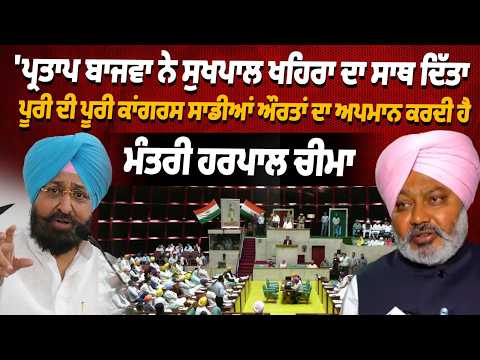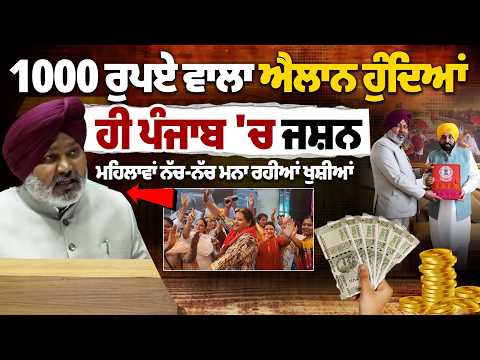



The 'Chief Minister's Mother-Daughter Respect Scheme' is a special feature of this budget.
Punjab Budget gives a comforting message Editorial: Although the state budget (2026-27) presented by Punjab Finance Minister Harpal Singh Cheema in the state assembly on Sunday is being condemned by the opposition parties as an 'election budget', yet this budget is not dependent on empty promises and claims and clearly presents a picture of the progress of the state.
'Mukham Mantri Maa-Dhiyan Satkar Yojana' is a special feature of this budget. Through this, an amount of Rs 1000 will be provided every month to women above the age of 18 years as assistance. The budget proposals claim that 65 percent of the female population in Punjab will benefit from this scheme. While a provision of Rs 1000 per month has been made for general category women, this amount will be Rs 1500 per month for Scheduled Caste women. A provision of Rs 9600 crore has been made in the budget to implement this scheme.
All the AAP leaders, including Mr. Cheema, claim that through the launch of this scheme, the Bhagwant Mann government has fulfilled all its election promises; that too without directly or indirectly burdening the common people. Apart from this scheme, an amount of Rs. 19,279 crore has been allocated to make Education Revolution 2.0 possible. This amount is 7 percent more than the amount reserved for the current financial year. This increase is being described as an example of the ‘government’s resolve’ to increase the pace of progress made in the education sector.
Government budgets are often a game of numbers. The real picture based on them is not necessarily as healthy as the budget shows. Despite such a negative trend, it is particularly noteworthy that the figures in the fifth (and last of the current government) budget presented by Harpal Singh Cheema do not sound hollow. The state income (revenue) in this budget worth Rs 2.60 lakh crore has been shown at Rs 1,26,190 crore. No new taxes have been imposed; which means that the state government will raise the remaining amount in the form of debt to reach the target of Rs 2.60 lakh crore. The possibility of this debt reaching Rs 4.42 lakh crore has also been shown in the budget. This is a matter of concern because this will increase the burden of repayment of principal and interest on past loans on the government. Already, due to this burden, 41 percent of the total state income is being spent on debt and interest, due to which the construction and maintenance of roads, bridges and other fixed assets has become a big challenge for the state government.
Apart from the government's opponents, impartial analysts have particularly pointed out two 'loopholes' in the budget. These are: the provision of Rs 6,879 crore in the healthcare sector (which medical services experts are calling less) and the absence of incentives for small and medium industrial units. The need for development of the agriculture sector and neglect of addressing the problems of farmers have also been levelled by prominent farmer leaders and some renowned agricultural experts. These allegations highlight the need for a meaningful response from the government during the debate on the budget. It is true that the government cannot please every section and every region of the state population, yet the picture it has projected through the budget certainly gives an optimistic message. This is the real achievement of this budget.